



Book for the summer from Elena Tarubarova
06.06.2021
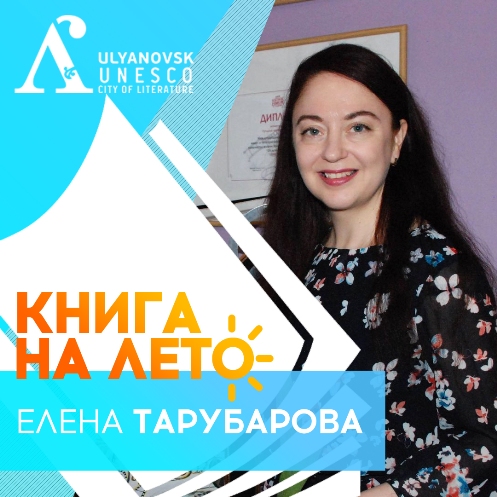
The Directorate of the program "Ulyanovsk - the City of Literature of UNESCO" presents a new rubric "Book for Summer". The guests of the column will talk about their favorite books for summer reading. Today the book is recommended by Elena Tarubarova, PR specialist at UlyanovskKinofond.
Elena Tarubarova about the book by Alexander Mitta "Cinema between hell and heaven"
People's Artist of Russia Alexander Mitta is our contemporary, a living classic, screenwriter and director of the action-packed film "Crew", one of the ten most popular films of the Soviet film distribution, the series "Border: Taiga Romance", films: "Burn, burn, my star", " The Tale of How Tsar Peter Married Married”, “The Tale of Wanderings” and others. Winner of the main prize of the Venice Film Festival for the film "The Ringing, Open the Door", a nominee for the Hollywood Foreign Press Association's Golden Globe Award for the film "Lost in Siberia". The last film by the master "Chagall - Malevich" was filmed in 2013. Alexander Mitta is a professor at the Film School of the University of Hamburg and a teacher at the Alexander Mitta Studio School in Moscow.
Mitta's journalistic work "Cinema Between Hell and Heaven" is devoted to the analysis and study of the structure of a dramatic work and some features that, according to the author, make the film "cool". "This book is for the person who wants to write a screenplay, direct a movie, and star in it," he writes. In addition, the author is sure that the book will allow you to get more pleasure from films. “Agree, if you know the rules of the game of chess, then you don’t wait like an ignorant who will win, but you get pleasure while playing. Cinema is a game more abruptly than chess. The audience in it is our partners, and any film is only as good as how well we played it together with you. Learn the rules of the game and have fun,” he urges.
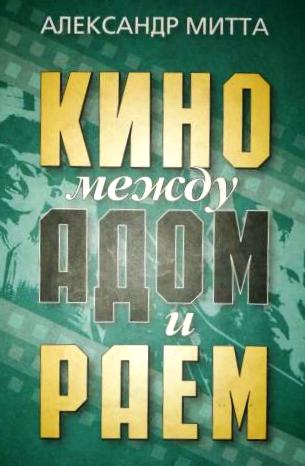
The book is written in simple, engaging language, and allows you to immerse yourself in making a movie as if it were an exciting adventure. The author himself calls it a practical guide, where all the basic principles of dramaturgy, operating both in television series and in the works of Shakespeare, are set out in a cheerful manner. Mitta sums up in Cinema Between Hell and Heaven his experiences as a director in the USSR and between 1990 and 2000 when he worked in the US and actively taught in Hamburg.
The book has a subtitle: "Cinema according to Eisenstein, Chekhov, Shakespeare, Kurosawa, Fellini, Hitchcock, Tarkovsky" - the works of these great playwrights are analyzed by the author as examples of building stories. In addition, Mitta tells funny and fascinating stories from the set, from his own and other people's creative biographies, and draws unexpected but reasonable conclusions from them, illustrating theoretical conclusions and proving their efficiency.
The reader is consistently explained what exactly can be called drama in general, drama in literature and drama in cinema. The author talks about the structural elements of the drama and how they fit into a single harmonious whole. A number of chapters are devoted to how to fill an already finished structure with energy and where to find it for this. The staging techniques used on the set are analyzed, and it is said about how effective or ineffective they can be. The book also tells about the importance of details that are imperceptible at first glance, but turn out to be indispensable in the future. The topic of discussion is the collective work of the film's creative team, the system of involving the viewer in the story, the types of characters, the rules that help the development of the conflict, and so on.
Mitta's book combines an easy style of presentation and practical significance. The reader is ready to perceive it as a collection of entertaining stories that, nevertheless, have applied value. Another valuable quality of the work is that the author describes the experience gained at different times in different countries, which gives the reader the opportunity to get an objective and maximum assessment of the world film process.
According to Mitta himself, his goal was to write a book about the "self-healing" of scripts, that is, about understanding "the laws by which the chaotic energy of life is transformed into a harmonious building of drama." That is what he successfully did. Reading The Cinema Between Hell and Heaven won't make you a Tolstoy or a Shakespeare, but it will help you understand why and how they did what they did and may give you an incentive to create or improve your own story.
The book is intended for adults and senior students who are interested in creativity, amateurs and professionals of cinematography. "Cinema between Hell and Heaven" by Alexander Mitta is included in the list of recommended literature of the leading Russian film universities.